Understanding Brick Weight in Cement Blocks
What weight means in cement bricks
Across South Africa, cement bricks weight isn’t just a metric—it’s a quiet determinant of every build. The cement bricks weight threads through wall thickness, handling plans, and the tempo of deliveries. Mass shifts the way lime and mortar set, the way vibrations settle, and the reliability of a facade against the wind. In busy sites from Durban to Pretoria, attention to this weight makes the difference between repetition and resonance in brickwork, and it can alter the tempo of a project!
- Size and configuration influence mass per square meter
- Moisture content can add or reduce weight with water
- Density of mix and reinforcement changes overall heft
Ultimately, understanding the weight of cement blocks clarifies how a shell speaks to the ground and endures the climate, guiding lifts and alignments with measured confidence.
Typical weight ranges for common cement bricks
Weight is not merely a number in cement bricks weight—it’s a dialogue with builders and the climate. In South Africa, understanding how much a brick carries shapes planning, from lifting schedules to how a facade holds up against wind and heat. The numbers tell a quiet, practical story about a wall’s rhythm.
- Lightweight hollow bricks: roughly 2.5–3.5 kg per brick
- Standard hollow bricks: roughly 3.5–4.5 kg per brick
- Solid dense bricks: roughly 5–7 kg per brick
Moisture content and curing affect cement bricks weight, shifting the numbers with damp air and the dry sun. This nuance helps explain how a shell speaks to the ground and endures the climate, guiding lifts and alignments with measured confidence.
Weight versus volume: density concepts
Weight is the quiet architect of a South African build. In the field, the conversation about mass changes everything—lifts, alignments, and how long a facade can stand up to wind and sun. Cement bricks weight isn’t merely a figure; it’s a consider-this moment in the construction diary.
Understanding cement bricks weight versus volume hinges on density. Density is the name of the game: mass per unit volume explains why a hollow brick can feel light in your hand yet still behave stoutly when fixed into a wall. The math translates to practical decisions, not bookshelf poetry.
Here are the levers that quietly shift the numbers on site:
- Moisture content in brickwork and ambient air can nudge weight up or down.
- Degree of curing and porosity changes how much water the brick stores.
- Temperature and handling conditions influence compaction and apparent mass during installation.
Effect of moisture on brick weight
Moisture is the quiet ballast behind every wall—it’s not just water, it’s weight that travels with your bricks. In South Africa, cement bricks weight can swing by kilograms per block during damp spells, quietly changing lift plans and facade behavior.
Understanding this on-site truth comes down to moisture interplay: water inside bricks and the surrounding air can tip the scales.
- Moisture content in bricks and ambient air can nudge weight up or down.
- Degree of curing and porosity determine how much water the brick stores.
- Temperature and handling conditions influence apparent mass during installation.
That’s the backstage drama of cement bricks weight—a subtle, weather-worn factor that never shouts but always counts.
Hollow vs solid cement bricks and their weights
On South Africa build sites, the cement bricks weight can swing by kilograms as the day shifts from scorching heat to damp, wind-swept evenings.
Understanding hollow versus solid cement blocks reveals why one brick feels lighter and another heavier in a wall. Hollow cores cut mass, while solid bricks add heft, affecting how façades behave and how crews move material.
- Hollow cement bricks are lighter thanks to voids that remove mass and ease lifting.
- Solid cement bricks offer greater density for sturdier feel and higher thermal mass.
- Core patterns influence handling, transport, and lift sequencing on site.
This quiet weight shapes lift plans and the way façades settle under weather, even here in South Africa.
Key Factors That Influence the Weight of Cement Bricks
Brick dimensions and porosity
Size isn’t just a cosmetic detail in construction. The truth is in the numbers—cement bricks weight can swing by a surprising margin with every batch. In South Africa, practical measurements hinge on brick dimensions and porosity, not mere stubborn optimism. No two batches kiss the scale the same way.
Key factors to note include:
- Brick dimensions: larger units carry more material and thus more weight, even before you factor in density.
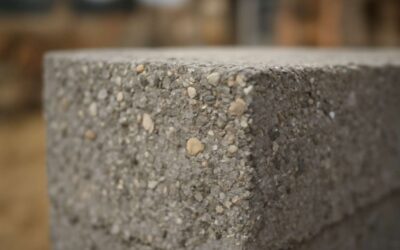
- Porosity: higher void content lowers density and weight, but can affect strength and insulation.
- Manufacturing tolerances and mix design: subtle shifts in cement content or aggregate size alter density from batch to batch.
These nuances guide design discussions and material selection, shaping how teams plan for weight distribution in walls and slabs—no more guessing from batch to batch.
Material composition and additives
Across South Africa’s brickyards, a single batch can swing the scale by mere grams, turning routine measurements into a dialogue with density. The truth behind cement bricks weight lies in batch quirks and the craft that binds them.
Key factors to note include material composition and additives that sculpt the unit’s heft. Consider these elements:
- Type and proportion of cement (Portland, blended cements)
- Grain size distribution and density of aggregates (sand vs gravel)
- Water content and its interaction with curing
- Admixtures such as fly ash, slag, and plasticisers
These choices ripple through the weight in quiet ways: even small tweaks in cement content or the size distribution of aggregates can shift heft from one batch to the next. In practical terms, this means structural teams plan with awareness rather than guesswork, forecasting load paths with respect to the heft and stability across South Africa’s varied building sites.
Manufacturing process and curing effects
Manufacturing cement bricks is as much an art as a science, and the difference between a uniform block and a quirky batch is often hidden in plain sight. In South Africa’s yards, even small deviations in mixing time, compaction, or vibration can alter density enough to shift handling and strength expectations. That’s why the manufacturing process matters as much as the raw materials, and curing plays a quiet, ongoing role.
- Mixing consistency and timing
- Compaction method and moisture control
- Controlled curing temperature and humidity
Ultimately, cement bricks weight reflects moisture migration, curing duration, and batch-to-batch consistency—an arithmetic of craft that teams use to plan safe, economical structures.
Moisture content and absorption
Across SA yards, a slight moisture swing can tilt cement bricks weight by kilograms per pallet. Moisture content is not a fixed trait; it shifts with humidity, storage, and handling. Absorption is a function of porosity—the brick’s tiny highways for water—and the history of curing and drying. The result is a subtle, ongoing arithmetic that engineers watch closely when planning loads and layouts.
Key factors include:
- Surface porosity and capillary absorption
- Ambient humidity and storage conditions
- Weather-driven moisture exposure and drying cycles
These elements feed into the overall weight in ways that are often invisible until blocks are weighed. Moisture migration and absorption govern the weight; understanding this helps ensure compliance and efficient design.
Regional standards and production variability
Across South Africa’s yards, regional standards draw a line in the dust, yet production variability writes its own gravity into cement bricks weight. Plants from Gauteng factories to coastal kilns drink different humidity and drying histories, and the scale tilts with each batch. The mortal truth is that cement bricks weight shifts with curing, transport, and the caprices of climate, a quiet arithmetic that engineers watch as closely as a clock, measuring the load as it shifts.
- Regional standards and QA protocols that set tolerances
- Plant-specific curing regimes, batch controls, and raw material variability
- Storage, humidity, and transport conditions that creep through the pallet
In South Africa, the nuance of climate and policy gives each pallet a story; the weight remains the quiet measure.
How to Measure and Compare Cement Brick Weight
Unit weight measurement methods
Across South Africa’s building sites, cement bricks weight isn’t just a number—it’s reassurance. When a wall rises, I feel the impact of every decision in the mortar. Knowing the cement bricks weight helps teams plan shipments, pallets, and tempo, turning uncertainty into solid progress.
Unit weight measurement methods range from direct on-site weighing to careful sampling. Weigh a known sample brick on a calibrated scale and multiply by the batch count for a reliable average. For bigger projects, compare brick weights to a certified reference and note moisture adjustments, too—cement bricks weight in practice.
- Direct on-site weighing with calibrated scales
- Sample averaging across several bricks
- Reference comparison against a standard
Used together, these methods empower contractors to compare cement bricks weight confidently, ensuring consistency from yard to wall and aligning with project budgets.
Weight per brick vs weight per cubic meter
A sturdy wall isn’t just bricks and mortar—it’s a math problem you solve under heat and dust. When you compare cement bricks weight, two lenses matter: weight per brick and weight per cubic meter. The first tells you what’s in each haul; the second translates that heft into volume, letting you compare across batches and yards without guesswork.
- Weight per brick gives a quick yard-to-wall check on pallets and deliveries
- Weight per cubic meter translates mass into a usable density benchmark for design and approvals
Used together, these figures keep consistency from yard to wall, aligning deliveries with design needs and project timelines. In South Africa’s varied supplier landscape, clear measurements curb surprises and keep projects moving.
Tools and procedures for testing
On South Africa’s busy building sites, a 1–2% swing in cement bricks weight can ripple through pallets, suppliers, and timelines. A handful of bricks gone heavy or light can tilt design assumptions and approvals—proof that every lump of mass has a job to do.
Measuring accurately relies on reliable tools and consistent conditioning. The core kit includes:
- Calibrated digital scale with at least 0.1 kg resolution
- Tare-weight capable scale to subtract packaging
- Moisture meter to gauge moisture content
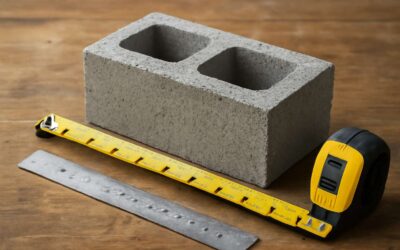
- Calipers or a tape for rough dimensions
- Data logbook or digital notebook for record-keeping
With these in hand, you compare batches and observe patterns across different deliveries, keeping cement bricks weight anchored from yard to wall. The approach builds a common language for design, procurement, and site planning in South Africa’s varied supplier landscape.
Interpreting results against standards
On South Africa’s bustling sites, a single swing in cement bricks weight can ripple through pallets, suppliers, and timetables. The truth lives in quiet data; a well-tuned eye reads not just numbers but futures—whether a wall line will breathe on schedule or stumble at inspection.
Interpreting results against standards means balancing reality with expectation: compare batch readings to the defined tolerance bands and to the project’s design assumptions. When variation drifts beyond the baseline, notes of moisture, packing densities, and delivery provenance become clues to root cause. The aim is consistency, not conquest; the numbers tell a shared story of reliability across yard, mill, and wall.
Quality control during manufacturing
A 0.5% drift in cement bricks weight can ripple through pallets and timetables on South Africa’s busiest sites. That metric is not merely a number but a pulse—hinting at schedule risk and the quiet integrity of the build.
Measurement in practice treats weight as a critical data point within a calibrated system. Teams consider how sampling scope, handling consistency, and batch-to-batch differences feed the design assumptions and quality targets.
Key considerations help bridge measurement to decision:
- Representative sampling across batch and production lines
- Calibration, traceability, and documented procedures
- Trend analysis and alignment with project tolerances
Ultimately, this metric becomes a shared language across yard, mill, and wall, guiding QC with reliability rather than guesswork.
Practical Implications of Brick Weight for Construction
Structural design considerations for brick weight
Weight is not mere heaviness but a governing lieutenant in the brickwork theatre. The practical implications of brick weight reveal themselves in foundations and load paths, where heavier cement bricks weight demand robust footings and evenly distributed forces through masonry walls. For cement bricks weight, the balance between density and performance informs where pilasters end and spans begin, shaping floor rhythm and the weathered poetry of South African climates.
On site, the structural designer considers brick weight when planning hoisting, storage, and bracing. Heavy units misaligned can overload mortar beds, risking cracks. A concise workflow—careful stacking, clear load paths, and verified adherence to standards—keeps construction safe and true.
- Safe handling and offloading on confined South African sites
- Thoughtful stacking to maintain plumb and prevent bowing
- Close coordination with reinforcement and curing schedules
Load calculations and safety factors
Brick weight isn’t a footnote—it’s the unglamorous choreographer of structural rhythm. In SA projects, cement bricks weight often dominates the wall’s dead load, guiding how foundations are sized and how columns align with spans. As one engineer puts it, “weight writes the design’s score.”
Practical implications for load calculations: whether a wall carries emphasis in a load path, or acts as a gravity element, heavier units demand stiffer footings and even distribution across a masonry plane. The weight informs interactions with damp-tight membranes, plaster thickness, and potential creep in long walls.
On site, the safety factors are visible in how units are stacked and braced. Coordination with reinforcement and curing schedules ensures the cement bricks weight is accounted for in the overall frame.
- Load paths remain clear and continuous
- Braced stacking to control bowing
- Compliance with regional standards and testing
Transportation, handling, and storage
“Weight writes the schedule,” an SA structural engineer reminds us, and the numbers on a pallet tell a subtler story than color or texture. —cement bricks weight—guides every handoff—from the truck bed to the bracing plan—ensuring foundations and frames stay in harmony across South Africa’s varying climates.
Practical implications for transportation, handling, and storage are tactile and immediate. Heavier units demand careful loading, measured bracing, and the right lifting gear to keep walls true and crews safe on site.
- Consider even distribution on pallets to avoid bowing.
- Ensure suitable hoisting methods to prevent microcracks.
- Maintain stock dry and off the ground to control moisture.
- Store on level, paved surfaces away from edges.
These dynamics render weight a visible stakeholder in project logistics, shaping delivery schedules and storage workflows.
Thermal and acoustic performance related to weight
Brick weight is not merely a pallet number; it’s the quiet conductor of climate inside a room. In South Africa’s hot summers and brisk winters, cement bricks weight lends steady thermal mass that slows heat gain and release. A SA structural engineer reminds us, ‘Weight writes the tempo of comfort’ and cement bricks weight plays that rhythm. Heavier blocks stay cooler by day and warmer after sunset, shaping spaces long after the crew packs up.
- Thermal mass moderates heat flow, reducing diurnal temperature swings.
- Denser mass improves sound attenuation, enhancing privacy and calm.
- Moisture buffering interacts with humidity, contributing to comfort in coastal zones.
Choosing brick weight becomes a design gesture, balancing energy goals with structural realities across SA’s climates. The weight of walls nudges acoustic performance and informs how spaces feel.
Estimating material quantities and waste
Across South Africa, the rhythm of a build is set not by the hammer’s strike but by the weight of the blocks. cement bricks weight fine-tunes how many units fit on a pallet, how many trucks chase the sunrise, and how waste reconciles with the budget.
Practical implications unfold in the ledger: brick counts hinge on mass, surface area per unit, and the space bricks occupy in storage. Each kilogram shifts space, mortar needs, and the line between use and surplus.
- Unit counts and area coverage shift with brick mass, reshaping bricks-per-square-metre calculations and the overall on-site footprint.
- Transport and storage are constrained by heavier blocks, narrowing pallet density and influencing how stacks align with access routes.
- Waste considerations follow the mass: heavier bricks can alter handling breakage patterns, making margins a quiet necessity.
Seen this way, weight becomes a quiet conductor in the orchestra of estimation—guiding choices, not dictating them.
Standards, Safety, and Best Practices for Cement Bricks Weight
Regional standards and testing protocols
Weight is the quiet engineer behind every South African wall. The cement bricks weight can decide how a façade carries loads and how a cavity handles wind. Regional standards keep that variable in check, ensuring predictability from batch to batch.
Standards and testing protocols in South Africa are steered by SABS and aligned with the National Building Regulations. They set expectations for how weight, moisture behavior, and dimensional stability are verified on bricks.
- SABS-approved test methods for weight and moisture behavior
- Acceptance criteria and tolerance bands for cement bricks weight
- Quality assurance and batch traceability throughout production
On safety and practice, facilities ensure proper handling, dry storage, and documented weight checks to prevent surprises on site. By keeping pace with regional standards, teams maintain consistent cement bricks weight performance and reduce risk when designs rely on weight data.
Quality control and inspection guidelines
In South Africa, the cement bricks weight is the quiet sentinel—”weight is the voice of the wall,” as some engineers say—tethered to SABS standards and the National Building Regulations. When a façade leans on a figure you can trust, this metric keeps every batch honest and predictable.
Key elements include:
- SABS-approved test methods for weight and moisture behavior
- Acceptance criteria and tolerance bands for weight
- Quality assurance, batch traceability, and documentation
On site, proper handling, dry storage, and routine weight checks guard against surprises. Cement bricks weight remains consistent, reducing risk in designs that rely on these numbers.
Safe handling, lifting, and site practices
South Africa’s construction scene runs on numbers, and the cement bricks weight is a heavyweight truth. In my years on SA sites, when SABS-approved test methods and the National Building Regulations hinge on it, a wall’s whisper becomes a shout—weight is the quiet sentinel that keeps designs honest and predictable. Onsite, crews respect the metric, because a misread weight can topple a stack of bricks; it can derail a schedule and a budget.
Safe handling and lifting boils down to practical steps:
- Match equipment to weight; use rated trolleys and lifting aids.
- Store bricks dry; moisture changes weight unexpectedly.
- Use PPE and a buddy system for heavy lifts.
- Record weight checks for batch QA.
This cement bricks weight data informs QA across batches, supports load calculations, and keeps you aligned with building regs. With disciplined on-site practices, surprises stay away and projects stay on track.
Weight changes due to moisture and aging
Weight speaks. On South African sites, the cement bricks weight settles plans into truth. Standards and tests whisper this weight into QA and structural calculations, for a wall’s fate hinges on measured certainty rather than bravado.
Standards demand repeatable results and traceable batches. Safety is the quiet partner: when weight data shifts, crews notice. Implement controlled weighing, calibration, and batch documentation to keep the project’s spine straight.
- Monitor moisture exposure; maintain dry storage
- Use calibrated scales; record batch weights
- Maintain an immutable weight log for QA
Best practices for moisture and aging treat bricks as living mass. Store under cover, shield from rain, and check weights at arrival and after curing. Allow for day-to-day moisture variation in load calculations, so surprises stay out of budget and schedule.
Common weight-related issues and troubleshooting
Weight is the wall’s quiet spine. In South Africa, QA audits flag up to 5% variation in cement bricks weight, a variance that can unsettle even solid designs.
Standards demand repeatable results; safety follows as a quiet partner. Keep the weighing area controlled, and log calibration with batch documentation.
Best practices emphasize governance over guesswork: a simple, auditable protocol that flags a batch for retesting before use.
Common weight-related issues and troubleshooting hinge on moisture handling and batch uniformity. If a discrepancy appears, reweigh, verify storage, and double-check scale calibration.


0 Comments